I don't have much time to spend on this blog, and it's a bit silly trying to update two blogs, so I'll be concentrating on my other blog for a while: http://www.apostmodernbard.blogspot.com/
See you there!
Friday 21 May 2010

Sunday 4 April 2010
Saturday 27 February 2010
We don't worry about where your granny was born
A vision I wish they would pay attention to at Stormont:
"Anarchists are not nationalists, in fact we are completely against nationalism. We don't worry about where your granny was born, whether you can speak Irish or if you drink a green milkshake in McDonalds on St Patrick's Day. But this doesn't mean we can ignore nations. They do exist; and some nationalities are picked on, discriminated against because of their nationality. Irish history bears a lot of witness to this. The Kurds, Native Americans, Chechins, and many more have suffered also - and to an amazingly barbaric degree. National oppression is wrong. It divides working class people, causes terrible suffering and strengthens the hand of the ruling class. Our opposition to this makes us anti-imperialists. ... So fight national oppression but look beyond nationalism. We can do a lot better. Changing the world for the better will be a hard struggle so we should make sure that we look for the best possible society to live in. We look forward to a world without borders, where the great majority of people have as much right to freely move about as the idle rich do today. A worldwide federation of free peoples - classless and stateless - where we produce to satisfy needs and all have control over our destinies - that's a goal worth struggling for."
Source: flag.blackened
"Anarchists are not nationalists, in fact we are completely against nationalism. We don't worry about where your granny was born, whether you can speak Irish or if you drink a green milkshake in McDonalds on St Patrick's Day. But this doesn't mean we can ignore nations. They do exist; and some nationalities are picked on, discriminated against because of their nationality. Irish history bears a lot of witness to this. The Kurds, Native Americans, Chechins, and many more have suffered also - and to an amazingly barbaric degree. National oppression is wrong. It divides working class people, causes terrible suffering and strengthens the hand of the ruling class. Our opposition to this makes us anti-imperialists. ... So fight national oppression but look beyond nationalism. We can do a lot better. Changing the world for the better will be a hard struggle so we should make sure that we look for the best possible society to live in. We look forward to a world without borders, where the great majority of people have as much right to freely move about as the idle rich do today. A worldwide federation of free peoples - classless and stateless - where we produce to satisfy needs and all have control over our destinies - that's a goal worth struggling for."
Source: flag.blackened
Sunday 14 February 2010
Sunday 13 December 2009
Emily Says...

One of the authors I'm studying this year is Emily Dickinson. This is a mixed blessing, for while I fell in love with Emily's poems a couple of years ago—she is now one of my favourite poets—, studying them for the French "aggregation" feels like raping the text.
Below I've posted one of her poems that speaks to me the most, especially because of my current situation. The two last lines are interesting as they seem to encapsulate an idea central to postmodern/Emerging Christianity.
Some keep the Sabbath going to the Church –
I keep it, staying at Home –
With a Bobolink for a Chorister –
And an Orchard, for a Dome –
Some keep the Sabbath in Surplice –
I just wear my Wings –
And instead of tolling the Bell, for Church,
Our little Sexton – sings.
God preaches, a noted Clergyman –
And the sermon is never long,
So instead of getting to Heaven, at last –
I'm going, all along.
Wednesday 2 December 2009
Top 10 Albums of 2009
It might be a bit early to write these kind of lists—2009 isn't completely over yet—but here goes anyway. My ten favourite albums this year were:
10. The Temper Trap - Conditions The hit "Sweet Disposition" of this atmospheric indie rock band from Melbourne was featured in (500) Days of Summer.
9. The Elms - The Great American Midrange After trying out a Black Keys brand of blues rock which didn't suit singer Owen Thomas's voice at all, the Elms have returned to their old rhythm'n'blues/heartland rock sound, but with smoother production and improved musicianship.
8. Camera Obscura - My Maudlin Career
 Camera Obscura's latest album sounds more contrived than their previous ones, but it's still enjoyable.
7. The Beatles in Mono
 I had to include these in my list. I especially enjoyed the reissue of the earlier albums: it helped me understand why their earlier stuff sounded edgy at the time!
6. God Help the Girl Belle&Sebastian's side-project (with female singers, mostly) is the soundtrack to Stuart Murdoch's upcoming musical film. It's far less pretentious than it sounds, and its 60s pop sound is quite refreshing.
5. Lily Allen - It's Not Me, It's You This is a great sequel to her first album—it's more clever, more mature, but just as fun.
4. Patrick Watson - Wooden Arms This album is probably less accessible than his previous one, but it's definitely worth the effort.
3. Tonight: Franz Ferdinand Many, many bands are having a go at "New Wave" these days, and it doesn't always work: but I think Franz Ferdinand have the creativity and the freshness that all those other "dance-punk" acts lack.
2. Monsters of Folk Conor Oberst (Bright Eys) + Jim Jones (My Morning Jacket) + M Ward. Sums it up, really.
1. M Ward - Hold Time A fantastic indie folk/alt country album...
10. The Temper Trap - Conditions
 The hit "Sweet Disposition" of this atmospheric indie rock band from Melbourne was featured in (500) Days of Summer.
9. The Elms - The Great American Midrange
 After trying out a Black Keys brand of blues rock which didn't suit singer Owen Thomas's voice at all, the Elms have returned to their old rhythm'n'blues/heartland rock sound, but with smoother production and improved musicianship.
8. Camera Obscura - My Maudlin Career
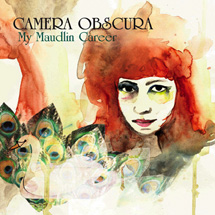 Camera Obscura's latest album sounds more contrived than their previous ones, but it's still enjoyable.
7. The Beatles in Mono
 I had to include these in my list. I especially enjoyed the reissue of the earlier albums: it helped me understand why their earlier stuff sounded edgy at the time!
6. God Help the Girl
 Belle&Sebastian's side-project (with female singers, mostly) is the soundtrack to Stuart Murdoch's upcoming musical film. It's far less pretentious than it sounds, and its 60s pop sound is quite refreshing.
5. Lily Allen - It's Not Me, It's You
 This is a great sequel to her first album—it's more clever, more mature, but just as fun.
4. Patrick Watson - Wooden Arms
 This album is probably less accessible than his previous one, but it's definitely worth the effort.
3. Tonight: Franz Ferdinand
 Many, many bands are having a go at "New Wave" these days, and it doesn't always work: but I think Franz Ferdinand have the creativity and the freshness that all those other "dance-punk" acts lack.
2. Monsters of Folk
 Conor Oberst (Bright Eys) + Jim Jones (My Morning Jacket) + M Ward. Sums it up, really.
1. M Ward - Hold Time
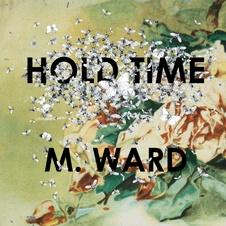 A fantastic indie folk/alt country album...
Friday 20 November 2009
Balloons, Toothbrushes and Jetpacks

Another great gig at the cabaret of the Cartonnerie... Cultural activities are getting better and better in this city, I do think Reims is slowly waking up.
Libelul was an unoriginal but enjoyable indie pop duo from Brussels, which sounded a bit like Death Cab for Cutie or Jimmy Eat World with a hint of electronica.
Then came the main support act, the Swedish Thus:Owls, (pictured above) fronted by a girl who was sporting a Joni Mitchell-like dress and who sang like Shara Worden from My Brightest Diamond. The band was obviously influenced by celtic music, but there was a heavy dose of psychedelia and quite a dark edge. It wasn't unlike what I imagine goth folk band Espers would sound like if they started covering the seventies psych folk band Trees...
Finally Patrick Watson (below) started playing... I love the indescribable form of
 baroque pop of his albums (in 2007 he won the Polaris Music Prize for best Canadian album, beating fellow nominees Feist and the Arcade Fire), but I was expecting Watson to be one of those pretentious singer/songwriters who stare at their piano keys during the whole concert.
But he actually turned out to be very charismatic, and great at engaging the audience. He kept cracking jokes with his bandmates and chatting away to us in his Quebecan French. He got everyone singing happy birthday for one of the sound technicians, and for the encore, he walked through the audience, singing into a strange Tim Burton-like contraption which was strapped on his back and that he called the "megasuit". It basically looked like a jetpack with half a dozen megaphones sticking out of it. His band made use of instruments in some of the most creative ways I've ever seen. The guitarist did things I've never seen anyone do with a guitar (he played it with a toothbrush at one point); the drummer/percussionist would often draw a bow against a saw; and there were also balloons, Fischer Price kiddies toys, toothpicks and countless other weird objects-turned-instruments... It was one of the most entertaining and "interactive" gigs I've ever been to. And it just shows you that you can make "serious" music without taking yourself seriously. Very refreshing.

Saturday 14 November 2009
Sixties Caesar

Thursday night I went to see Shakespeare's Julius Caesar, played by the American Repertory Theater company. I hadn't been to see a play in ages; the last one I'd seen was Othello at the Globe in London, a couple of years ago. I'd forgotten how much I loved the theatre!
I used to go quite often, when I lived in Château-Thierry. They had two small local theatres and they always had something interesting on. And my high school literature teachers often organised trips to Reims to see plays there.
The Comédie de Reims is a really good theatre. A great variety of plays are staged there, sometimes in French, sometimes in the play's original language. Most of those I saw there were really interesting; a few were pretty bad—the kind of plays where the director gets the female lead to show her tits, probably hoping that this will somehow compensate for the play's mediocrity.
I think I can safely say that the ART's Julias Caesar was one of the best plays I've ever seen. Several critics accused it of being too "facetious", or too difficult to understand, because of its style. But I think the director, Arthur Nauzyciel, really brought the characters—and the play itsel—to life, which is quite an achievement in itself: Julias Caesar is far from being one of Shakespeare's greatest plays (the plot is quite basic, the characters are very one-dimensional when compared to Hamlet, or MacBeth, or Lear). He stuck close to the text, but brought to it a depth which is lacking in the original.
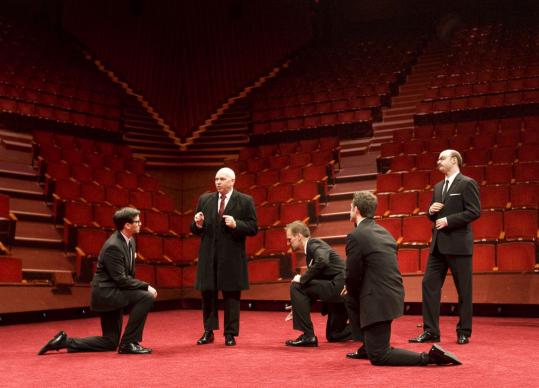
It was full of surprises. The play was re-set in America in the 1960s, probably to draw parallels between Caesar and JFK's assassination. It was fun to hear Shakespeare played with an American accent, for a change! The actors were dressed in sixties-style suits, and surrounded by mod couches, lamps and armchairs. They often walked about with a glass of wine in their hands, as if they had walked out of some fancy cocktail-party.
The background was a huge, life-size photograph of an empty theatre (see below), which, as a classic postmodern device, kept reminding the spectators that what they were watching was fiction, not "real life". I'm sure Shakespare would have appreciated that, as he always liked to remind his audience that all the stage did was reflect the world. At the beginning of the play, the actors faced the audience, in front of huge white frames, which made them look like celebrities caught on one of Andy Warhol's prints.
The actors were quite talented, especially Mark Montgomery, in the role of Cassius. A lot of them had film/TV experience: one appeared in The Dead Poet Society, another in The Wire. One of the actors (who played Brutus's servant, Lucius) delivered all of his "lines" in sign language; his character was ever present on stage, most of the time sleeping, or looking at the other characters, as if he were in a dream. At one point of the play he disappeared, and walked back on stage dressed in a pair of Superman pyjamas and a cape. I'm not quite sure what the director was trying to get at there!
But the most surprising thing of all was that a jazz trio was present on the side of the stage during the whole play. From time to time the singer, in her black evening gown and covered in silver jewellery, would start crooning into a ribbon microphone, while two men in suits and bow tie suavely plucked the double bass and picked the guitar. The songs marked the end of scenes, or sometimes even interrupt scenes to ironically comment, in a way, what was happening (a few scenes before Brutus's suicide, she sang... "Suicide is Painless"); it had also had the effect of being a show within a show.
All in all, I had a great time. The only annoying thing is that, since I managed to get a good seat, I was surrounded by the Fur Squad—ie the bourgeoisie of Reims—who always show up at the theatre (or at the jazz festival), just because they hope to be seen, and they always end up sitting there bored to death, since they don't have the foggiest notion about art.
Wednesday 11 November 2009
The French Connection #1

C'est décidé. I'm going to initiate myself to French culture—something I've managed to avoid for twenty years despite the fact that I've been living in the country for all that time.
But I don’t mean French high culture. I already enjoy French literature, French painting, French classical music, French kissing and French cancan. I mean French popular culture. It's something I've always snubbed.
I'm starting with cinema. I've always found modern French acting to be, well, frankly, terrible. And most of the French films I've seen (apart from a few exceptions) I didn't like, either because it wasn't my type of humour, either because they've been the kind of films with scenes where you see a close up of a man washing his hands in the sink for five minutes straight (as one friend from Norn Iron once put it). But I decided to give it another chance. I thought I'd start with the nouvelle vague, an influential movement in cinema which started in France in the 1960s.
So last week I watched Jean-Luc Godard's 1965 film Alphaville. I thought it would be an easy start, since it's science fiction: I wasn't disappointed. It was brilliant. It wasn't like the American sci-fi B-movies of the time. No airships, no spacesuits, nothing extra-terrestrial; the setting was a French city in a not too distant fascist future. (Everything was shot in real locations in Paris.) There were a lot of themes apparently inspired from 1984 and Brave New World, but with a distinctive French touch. It was exciting, and fun to watch, but there were some very interesting shots, which had an experimental feel to them that hasn't been lost, even when being viewed today. And the acting... well, I was expecting bad, affected acting. But the actors were really talented, especially Anna Karina (pictured left), a sort of French Diana Rigg or Audrey Hepburn. (I actually found out afterwards that she was Danish-born, and that the lead male actor, Eddie Constantine, was born in LA, but I don't know if that has anything to do with the acting style).
Anyway I think I'm a convert, and I'm ready to see my next 1960s French movie... Probably Godard's Breathless. I'll keep you posted!
By the way, here's the most famous scene from Alphaville:
Thursday 5 November 2009
Grapes and Virgins

At the end of last month I went to two gigs. One was by John Grape, a local indie folk band (and not a singer), which played for the "Noctambule", which is a night-time festival in Reims. Musicians, dancers, actors, artists etc come out in the streets. It's a great idea, it's just a pity that there aren't more people who come out for it.
A week later Lydia and I went to see the Virgins, a "dance-punk" band. They've only released one album so far, which is okay but not great. So I was impressed by their show: they're clearly far better live, and they've improved a lot since last year, when they released their album. It had been a while since I'd been to a gig with music you could danc
 e to, and it was actually a lot of fun. The singer, Donald Cumming, also sang a couple of folk/blues ballads. It fitted his voice perfectly. It was a departure from their usual rock songs, which suggests that the band could come out with some surprises in the future... We'll see.
I was a bit bummed because I missed Shannon Wright and I won't be able to see Peter von Poehl, but I've got my ticket for Patrick Watson, who's coming later in the month.
Monday 2 November 2009
"I've got nothing against Irish people, but..."
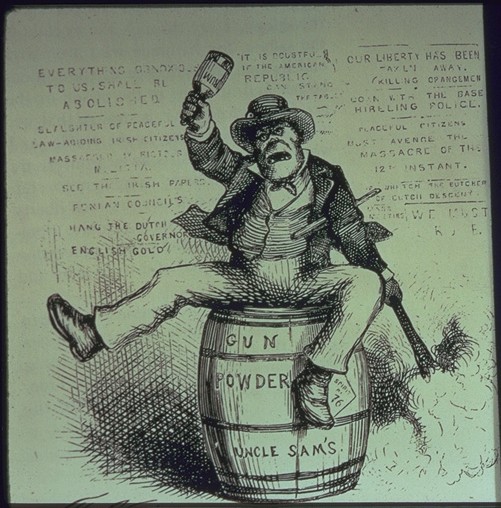
So I was in the Kilberry—one of Reims's "Irish pubs"—last week, like every week, for a well-deserved pint after hours of mind-numbing lessons. My mate introduces me to this guy who goes to our classes. I haven't even noticed him before. Anyway, before drinking his pint, this bloke raises his glass, and says—remember that we're in an Irish pub— "God save the Queen" (in a terrible French accent, incidentally). I tell the guy that, being Irish, I can't join him in a toast to the Queen—not that I have anything personal against old Lizzy; as far as monarchs go she's not too bad; I just don't give toasts to anyone in positions of power— and my mate and I laugh it off. I mean the guy is only joking after all, right? Right? A few moments later my mate goes out for a smoke, and I'm left alone with the royalist, who turns to me and says "You're Irish? Oh well could be worse". I stare at him blankly. "I'm joking", he says, "but I'm pro-British". I shrug, trying to indicate that I'm more interested in my glass of Belgian ale than in his political views. But he forces me into a monarchy vs republic debate, which turns out to be rather interesting. I'm starting to warm up to the guy—or at least I'm beginning to thaw—but then he says: "You know, I've got nothing against Irish people, but..." Of course this one of the phrases most used by bigots. (Take the similar phrase: "I'm not..., but I don't like...", fill the blanks with: racist/Blacks, homophobic/gays, anti-feminist/women, etc. and you get the same general effect). He then draws a list of all the traditional vices that Victorians liked to ascribe to Irish people. He was extremely anti-Catholic (although I later learnt that his girlfriend was Polish and Catholic), and I pointed this out to him, while telling him that I myself came from a Protestant background and that I was born in Northern Ireland. His face cleared and he said something like "Oh that's not so bad then". He didn't seem too happy when I told him that I wasn't a unionist. And he then went on to say how Irish Protestants are just the same as Irish Catholics (not in the sense that we should forget our differences because we have more in common than we think, but in the sense that all Irish people are obscurantist medieval monkeys), but I wasn't listening anymore because my glass was empty, and my mate was coming back from his smoke anyway.
But it was a strange experience. French people usually love the Irish as much as Americans do (and almost as much as the Irish do themselves) and although I'm used to hearing silly stereotypes repeated over and over again (sheep, leprechauns, Guinness, Bono) I know that those are meant as compliments. But this guy came out with things which were borderline racist, and were definitely anti-Irish. He told me his mum had English ancestors, so maybe old prejudices have been passed down to him that way? It's only the second time in my life that I've heard a French person talk like that (the other time was at a St Patrick's party six years ago, when a drunk French soldier told me that the British army should have wiped out all the Irish decades ago, and that basically Bloody Sunday must have been heaps of fun. Man I loooove the military). In any case it was very, very bizarre, and quite disturbing.
Monday 21 September 2009
Quill in Hand
While reading a friend's poetry blog, I realised that I've been neglecting m y own for a while. I was working at my Masters thesis this year, and now I'm preparing for that oh-so-French ordeal, the agrégation, so I haven't had much time to publish anything lately. The last time I completed a poem was over a year ago. But I haven't been completely unproductive. At the beginning of the year, around February I think, I had an idea for a novel. It partly evolved from a different project which I was working at the year before (see here for a snippet) and which was much too ambitious for me at the time, but most of it is new. I've been thinking it over during the past six months, trying to come up with a few things. I wrote a few scenes here and there. I managed to (mentally) paint the setting. During the summer I concentrated on the characters quite a bit. They are taking shape, coming to life, becoming "fuller", which is a lot of fun. Thanks to that, I've been able to concentrate on the plot more in the past few weeks. Nothing is fixed or definitive yet, of course, but I have an idea of what I want to get at. I don't want to talk about it too much yet, but I suppose you could say that it's a sort of coming-of-age story set around a second-hand bookshop (nope it's not a Black Books rip-off, as fun as that would be!) in a fictitious town in France. I've no idea if I'll ever finish it, or ever dare show it to anyone, but still, it's something which I'm starting to get quite excited about!
PS: this is a small text I'd written with the story in mind, but I've no idea if I'll include it or not.
 y own for a while. I was working at my Masters thesis this year, and now I'm preparing for that oh-so-French ordeal, the agrégation, so I haven't had much time to publish anything lately. The last time I completed a poem was over a year ago. But I haven't been completely unproductive. At the beginning of the year, around February I think, I had an idea for a novel. It partly evolved from a different project which I was working at the year before (see here for a snippet) and which was much too ambitious for me at the time, but most of it is new. I've been thinking it over during the past six months, trying to come up with a few things. I wrote a few scenes here and there. I managed to (mentally) paint the setting. During the summer I concentrated on the characters quite a bit. They are taking shape, coming to life, becoming "fuller", which is a lot of fun. Thanks to that, I've been able to concentrate on the plot more in the past few weeks. Nothing is fixed or definitive yet, of course, but I have an idea of what I want to get at. I don't want to talk about it too much yet, but I suppose you could say that it's a sort of coming-of-age story set around a second-hand bookshop (nope it's not a Black Books rip-off, as fun as that would be!) in a fictitious town in France. I've no idea if I'll ever finish it, or ever dare show it to anyone, but still, it's something which I'm starting to get quite excited about!
PS: this is a small text I'd written with the story in mind, but I've no idea if I'll include it or not.
Sunday 6 September 2009
The meaning of life and stuff
So, what is the meaning of life ?
The question keeps popping into my head these days. It always has, I guess, but it’s been bothering me even more, lately. Frankly it's quite annoying. I mean I’d rather be left alone, left to enjoy eating Fry’s chocolate Turkish delight or drinking tea or beer or listening to the Velvet Underground or whatever, you know ? But no. Hm-hm. The Question won’t leave me five minutes’ peace. Not one single day of respite.
What makes things even more frustrating is that as a christian you’re supposed to have all of your shtuff together, you're supposed to have things more or less worked out, or at least that’s what the more sanctified (sanctimonious?) believers expect of you. You’re supposed to accept that you’re here for a fixed purpose (whatever that purpose might be) and that’s that. But it’s not as simple as that. Nothing ever is. (Except perhaps biting into a chocolate bar.) Because meaning doesn’t only come down to purpose. There’s also the question of identity. Even if you have a purpose in life, you can still wonder who you are, how, and why.
Sometimes I envy the freethinkers. No really. I really do. At least for them, the meaning of life is that there is no meaning – or at the very least, that meaning must be figured out or created out of scratch by oneself. I like that idea, probably because I’m a proud git and don’t like to have meaning shoved down my throat. I also envy the more naïve people (or maybe they’re just people of greater faith?), precisely because of the fact that they can swallow meaning (or truth, or purpose, or whatever you want to call it) as if it was maple syrup. I wish I could. At least I’d have some kind of solid framework. Still, I cross my fingers and hope that if I don’t know who/what/why I am, hopefully a Higher Power does.
Maybe the HG2G super-computer was right. Maybe the answer to life, the universe and everything really is 42.
.
The question keeps popping into my head these days. It always has, I guess, but it’s been bothering me even more, lately. Frankly it's quite annoying. I mean I’d rather be left alone, left to enjoy eating Fry’s chocolate Turkish delight or drinking tea or beer or listening to the Velvet Underground or whatever, you know ? But no. Hm-hm. The Question won’t leave me five minutes’ peace. Not one single day of respite.
What makes things even more frustrating is that as a christian you’re supposed to have all of your shtuff together, you're supposed to have things more or less worked out, or at least that’s what the more sanctified (sanctimonious?) believers expect of you. You’re supposed to accept that you’re here for a fixed purpose (whatever that purpose might be) and that’s that. But it’s not as simple as that. Nothing ever is. (Except perhaps biting into a chocolate bar.) Because meaning doesn’t only come down to purpose. There’s also the question of identity. Even if you have a purpose in life, you can still wonder who you are, how, and why.
Sometimes I envy the freethinkers. No really. I really do. At least for them, the meaning of life is that there is no meaning – or at the very least, that meaning must be figured out or created out of scratch by oneself. I like that idea, probably because I’m a proud git and don’t like to have meaning shoved down my throat. I also envy the more naïve people (or maybe they’re just people of greater faith?), precisely because of the fact that they can swallow meaning (or truth, or purpose, or whatever you want to call it) as if it was maple syrup. I wish I could. At least I’d have some kind of solid framework. Still, I cross my fingers and hope that if I don’t know who/what/why I am, hopefully a Higher Power does.
Maybe the HG2G super-computer was right. Maybe the answer to life, the universe and everything really is 42.
.
Saturday 1 August 2009
The Go-Getter
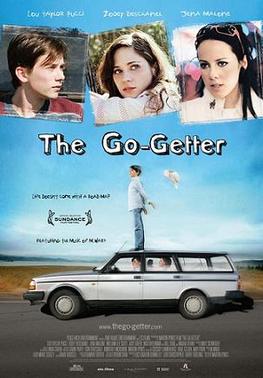
I'd never heard of the Go-Getter until I checked out Zooey Deschanel's filmography ; it's an indie road movie which was released in the beginning of 2007 and only ran for three days, grossing less than $12,000. Most of the cast (which is quite small), I'd never heard of before. Apart from Zooey Deschanel, the only recognisable face was Jena Malone (Donnie Darko, Into the Wild).
I loved the movie. I mentioned this in one of my last posts, but I'm a sucker for those kind of "indie" films. All the ingredients were there : an introspective anti-hero, a couple quirky characters, understated acting, the classic road movie "drive-by" scenes, and of course the trademark indie folk music (M. Ward, Animal Collective, Elliot Smith, the Black Keys).
Unoriginal, probably. Clichéd, no doubt. But it does the trick.

It's funny how different people respond so differently to works of art, be it painting, movies, music or literature. I don't think it's only to do with upbringing or education or peer influence. I can't help thinking that it has a huge deal to do with personality. I know it has its limits, but I think personality psychology could provide some answers, or at least some clues. (I've been interested in the Myers-Briggs Type Indicator and the "Enneagram" theories lately.) For example, I wonder if certain types prefer to watch (or to work on) certain films. Maybe SP types ("Artisans") prefer quicker-paced, action and sometimes violence-orientated) movies ; and NFs ("Idealists") maybe opt for slower, more introspective films.
I loved the movie. I mentioned this in one of my last posts, but I'm a sucker for those kind of "indie" films. All the ingredients were there : an introspective anti-hero, a couple quirky characters, understated acting, the classic road movie "drive-by" scenes, and of course the trademark indie folk music (M. Ward, Animal Collective, Elliot Smith, the Black Keys).
Unoriginal, probably. Clichéd, no doubt. But it does the trick.
It's funny how different people respond so differently to works of art, be it painting, movies, music or literature. I don't think it's only to do with upbringing or education or peer influence. I can't help thinking that it has a huge deal to do with personality. I know it has its limits, but I think personality psychology could provide some answers, or at least some clues. (I've been interested in the Myers-Briggs Type Indicator and the "Enneagram" theories lately.) For example, I wonder if certain types prefer to watch (or to work on) certain films. Maybe SP types ("Artisans") prefer quicker-paced, action and sometimes violence-orientated) movies ; and NFs ("Idealists") maybe opt for slower, more introspective films.
Thursday 30 July 2009
Melomania
Got back from Scotland about a week ago, but I'm already back at work, preparing for the upcoming year. I might put some pics up later.
In the meantime, here's what I've been getting my kicks from (apart from shrooms, of course).

Wilco - Wilco

Eels - Hombre Lobo

The Hold Steady - Stay Positive

Kaleidoscope - Faintly Blowing

Crosby, Still, Nash & Young - Déjà Vu
In the meantime, here's what I've been getting my kicks from (apart from shrooms, of course).

Wilco - Wilco

Eels - Hombre Lobo

The Hold Steady - Stay Positive

Kaleidoscope - Faintly Blowing

Crosby, Still, Nash & Young - Déjà Vu
Monday 29 June 2009
Sunshine Cleaning
 I went to see Sunshine Cleaning yesterday ; I hadn't been to the cinema for a while. I'd missed it. It's so different from watching DVDs. I don't know if it's because of the "collective experience" side to it, or the bright silver screen, or the dusty tattered old seats, but there's definitely something magic to the cinema... A bit like in Terry Pratchett's Moving Pictures. The cinema I go to in Reims is privately owned ; it's set in an old opera-house, and it often shows "indie" films and foreign movies, subtitled and in the original language instead of dubbed as in most French cinemas.
I was really looking forward to Sunshine Cleaning. I'm a sucker for all those Sundance festival films. I'm aware that that type of "indie" film isn't original anymore. The humour is often dark, the characters are offbeat, and the soundtrack is always made up of indie pop or folk bands. But I love those films. I go to the cinema for the entertainment, not for highbrow pseudo-intellectual arroganza—I spend enough time reading that sort of stuff for uni, thank you very much. The Sundance films maybe aren't original, but they're entertaining, and more often than not, refreshing.
In Sunshine Cleaning, as in Little Miss Sunshine, all the characters are "broken", they are all "losers". Rose (Amy Adam) is an ex-cheerleader who is now a cleaner-lady, who hasn't the strength to put an end to an affair with her high school sweetheart who decided to marry another girl. Rose's little boy, Oscar, is a gifted but "special needs" child who keeps getting kicked out of school because of his OCD behaviour. Rose's younger sister, Norah (Emily Blunt), is a thrill-seeking immature young adult who can't hold a job, and tries to drown her grief in anything she can. The girls' mother committed suicide when they were very young, and they've never managed to get over it ; their father (Alan Arkin) keeps making promises he never keeps, and, convinced that he has "business acumen", constantly plans new and unsuccessful business ventures. All the characters need redemption, and they find it by helping others. Rose and Norah feel a special connection to the people they clean up after (they start a crime scene cleanup business). Their father takes care of Oscar while they're at work. A one-armed shopkeeper looks after Oscar at one stage during the film. And yet all these "helpers" are never "rewarded" in any obvious way. Rose takes care of the whole immature bunch (son, sister and father) and never gets any recognition for it. The one-armed shopkeeper who seems to like Rose doesn't even get a "thank you" from her for looking after her son. Norah tries to help a young woman by reconciling her with her dead mother, and it doesn't work out ; she even accidentally burns down a house while working alone to let Rose go to a high scool reunion party. The grandfather fails to raise enough money to buy Oscar a gift he promised to give hi
 m for his birthday.
None of the characters are "rewarded" in any conventional way. Instead, they find love. Not eros, not romantic love, but agape, unconditional love. They grow closer to one another. They may be broken, and yes, they may be losers in the eyes of the world, but together, they are able to "cope", to live, to find joy.
Monday 22 June 2009
Burqa or no burqa?

There is a huge debate going on in France at the moment over the burqa, the Islamic headdress which covers women from head to toe, and which conceals the face behind a mesh screen. Should it be banned by the state, or not ?
On one side there's the majority of French people who, in the name of freedom, women's rights and laïcité (the strict separation between religion and the state) argue that the burqa should be banned in public places.
On the other there are a number of Muslims—mostly the women who wear the burqa themselves—who claim that they are exercising their freedom by choosing to wear this garment and that any legislation banning it would be an infringement on their right to practise their religion.
What is interesting is that it has emerged that most of the burqa-wearers are in fact French converts to Islam ; not immigrant Muslims or second-generation "immigrants". In fact several moderate Muslims have argued against its use.
In an important speech in front of parliament this afternoon, Sarkozy proclaimed his opposition to the wearing of the burqa and anounced that he would set up a committee to decide which measures—if any—should be taken to deal with it.
I believe that the burqa is one of the biggest (and worst) symbols of the oppression of women ; of course extremist Islam does not hold a monopoly on the ill-treatment of women, but that's no excuse. Advocates of the burqa have said that it protects women and "liberates" them by preventing men from seeing them as objects. Yet it seems to me that wearing such a garment is just as dehumanising as selling one's body by working as a porn actor or as a prostitute. Just as sex workers and women in the porn industry are exploited—consciously or not—so it is with the wearers of the burqa. And even if some women wear the burqa willingly, by choice, who is to say how many are brain-washed, frightened or even coerced into wearing it? I don't think it's a sign of "cultural imperialism" or Western arrogance to be against the wearing of the burqa. I don't mind the wearing of the hijab (the "headscarf"). It's not something I agree with but I can understand it. But the burqa? That's simply going too far.
Yet, having said that, I'm not sure that banning the burqa is such a good idea. Perhaps for minors, but not for adults. For one thing, on a pragmatic level, I don't think it's a very good strategy. It would almost certainly further alienate the Muslim community. It could foster a siege mentality, and push even more young men and women into the arms of the wahhabists. Besides, if the government wants to fight the rise of religious extremism, it should work hard at addressing one of the root causes of this radicalisation : poverty, ghettoisation and feelings of alienation because of the fact that our consumerist society has only the latest Ipod to offer as an answer to life's questions.
But I'm also not in favour of the ban for another reason : I believe that too much legislating isn't a good thing ; I don't like the idea of a bureaucratic state encroaching on individual freedoms. It isn't its business. I don't have any answers to the problem, but I don't think that creating more laws is the solution.
Wednesday 17 June 2009
Sorry I'm Late
I haven't much time to blog these days, but I'll try to get back to it soon... In the meantime here's another cool stop-motion video by Tomas Mankovsky.
Wednesday 13 May 2009
Stories

Stories. That's one thing I couldn't do without. Like music, wine and chocolate.
In fact, it's probably something noone can do without. Stories are everywhere. In the films we see at the cinema, in the soaps we watch on the telly. The best songs are stories put to music—or music put to a story. Paintings often bring stories to life. Why is Mona Lisa smiling ? What happened to Van Gogh's ear ? What was Piet Mondrian trying to put in order, with his rigid perpendicular lines and sober squares ?
Advertisers are aware of our interest in stories. Brands like to pretend that they are several decades or even several centuries old, and often on the packages of their products you can read their "story". One of the most important trends in clothing and decorating is the "vintage look": clothes and objects have to tell a story or at least have a history.
Oral storytelling is probably as old as humanity itself, and every culture's mythologies are based on stories—more so than theology. History is boring when it's presented as a list of dates, intriguing when it tells the story of the people that lived ten, a hundred, a thousand years ago. Philosophy, religion and science become dogmatic when they concentrate on the particulars and forget the story.
Heck, we all like to have some amount of drama going in our own, real lives ; we all want to have a story to tell.
It was my grandfather who first introduced me to the world of stories. I remember him sitting in his old dark green armchair, resting his hands on his generous belly. I would sit facing him, on the sofa, my toes barely touching the floor, looking out of the window at the semi-detached red brick houses which surrounded the street. The only way you could tell them apart was by looking at the drain pipes, which hugged the walls like ivy: they were all painted in different colours. Brown, blue, green, yellow, white, red. Granny would come in to the living room, bringing me a cup of fresh milk and a plate with a buttered scone or a jam bun. Grampa would only get a cup of tea. He would give Granny a sad puppy dog look, but she would never yield. He, however, would always get a bar of chocolate or a biscuit from somewhere—he must have had a hidden stash. He would give me one, take a bite of his an say: "Well-now." Then his story would begin. About musketeers, with their swords, capes, and moustaches. About pirates, with their eye-patches, parrots, and panache. He would tell me about James Bond—his gadgets, his girls, his martini—when I was still too young to be allowed to watch the films. Sometimes he would tell me one of his own stories: as a boy scout he had slept in a haunted castle and heard the banshee scream ; he had come across the terrible pooka-horse when cycling down the small Irish country roads as a young man, and it had made him ride into a dung hill in a field ; he had seen a faerie in the isle of Man and had caught a glimpse of a leprechaun in his own garden.
Grampa's stories sent be back in forth in time, they took me all over the world. They taught me how to daydream, how to fantasise, how to develop a rich inner life. They set my head firmly in the clouds. I've never come down since.
Sunday 3 May 2009
Tree

He stood barefoot, his back against the old oak tree. He closed his eyes. He dug his toes into the rich, welcoming earth which lay between the oak tree’s gnarly roots. They were warm in the primeval dust which had swallowed them up. He almost felt them grow, reach down deeper, further, closer to the timeless, abyssal mysteries. He slowly lifted his arms above his head. He could hear the suave whispering of the leaves above him. The wind, that evanescent lover, stroked his hair, caressed his soul. His face glowed in the sun. He could feel its fingertips on his cheeks. He smiled. He knew at that moment that he was alone, utterly, fatally alone. But he was alive. And that was enough.
.
Subscribe to:
Posts (Atom)
Emerald Champagne
Currently reading...
Labels
Blog Archive